
RO care guide
RO Water Flow Slow? Causes, Checks and Repair Guidance
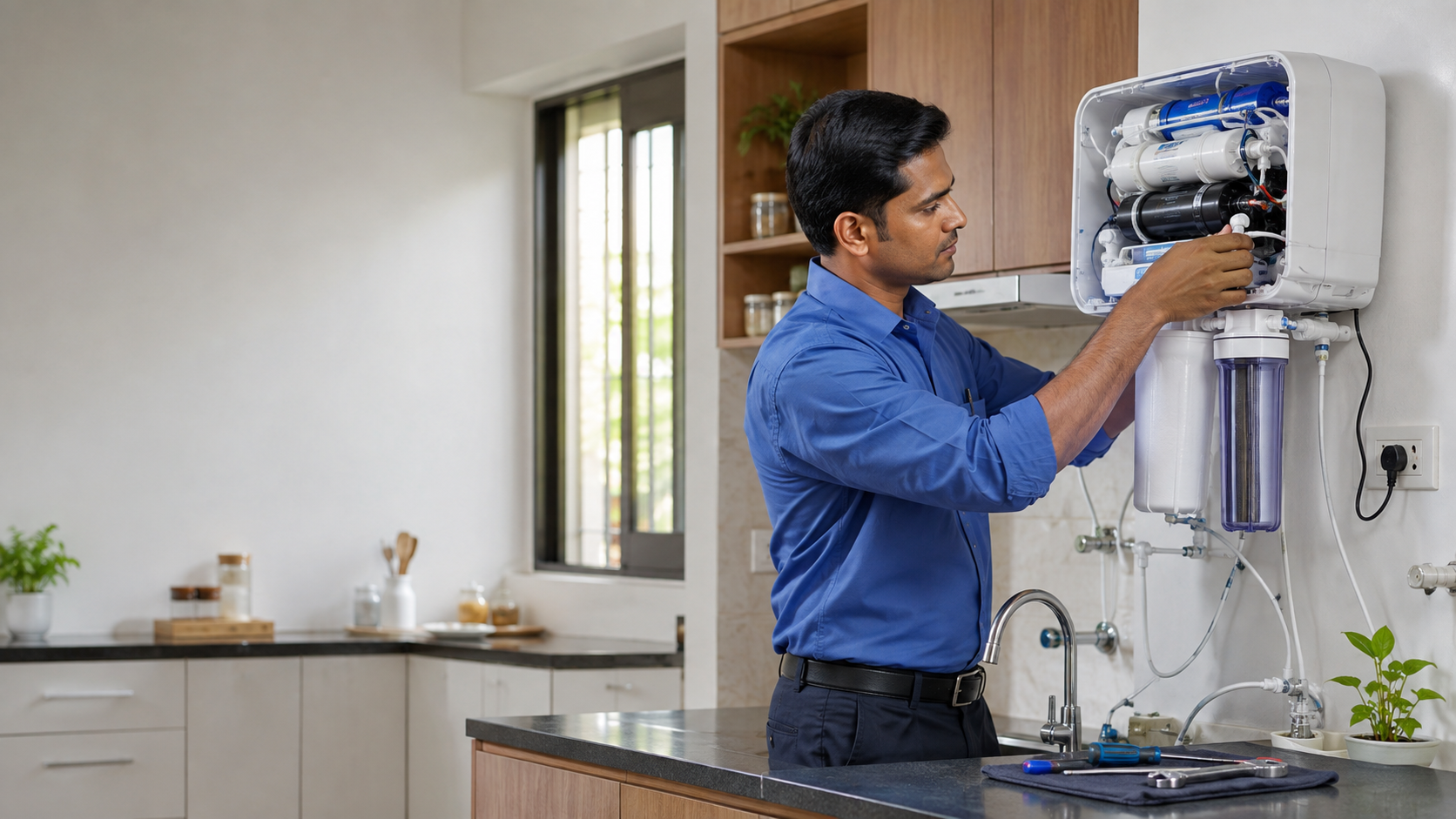
Slow water from an RO purifier is a symptom, not a diagnosis. The cause may sit before the purifier, inside the filtration stages or after purification in the storage and dispensing path. Checking the complete flow path helps avoid unnecessary part replacement.
Start with the incoming water supply
An RO system needs a stable inlet supply. Low municipal pressure, an empty overhead tank, a partly closed inlet valve, a kinked tube or a clogged external pre-filter can reduce production even when the purifier itself is working. First confirm that other taps have normal flow and that the purifier inlet valve is fully open.
Do not dismantle pressurised housings or electrical parts. If the inlet supply changes during the day, note when the RO becomes slow. That timing can help a technician separate a home-supply issue from an internal purifier fault.
Sediment and carbon filters may be restricted
Sediment filters trap visible particles, while carbon stages address chlorine, odour and other contaminants according to the purifier design. As these filters collect impurities, resistance can increase and reduce the water reaching the membrane.
Filter life cannot be judged reliably by calendar age alone. Delhi NCR water quality varies by locality, source and season. A filter should be assessed using condition, pressure, service history and performance rather than replaced only because a fixed number of months has passed.
Pump pressure and membrane performance matter
The booster pump supplies pressure needed for membrane production. A weak pump, restricted flow control, failing power supply or internal leakage can reduce output. The membrane can also produce less water when pressure is low, feed water is cold or scaling has developed.
A technician may compare inlet pressure, pump performance, reject flow and purified-water output before recommending a membrane. Input and output TDS readings are useful, but a single TDS number does not explain the entire flow problem.
The storage tank can make dispensing feel slow
Sometimes purification is normal but water leaves the faucet slowly. Incorrect air pressure in a pressurised tank, a restricted faucet, a pinched outlet tube or a faulty valve can reduce dispensing flow. In such cases, replacing filters or the membrane may not solve the complaint.
Observe whether the purifier takes a long time to fill, or fills normally but dispenses slowly. This simple distinction gives the technician a useful starting point for diagnosis.
Safe checks you can do before booking service
Confirm the inlet valve is open, check whether the home has water supply, look for a visibly bent tube and note any unusual sound or leakage. Switch off power if there is active leakage near electrical components. Avoid opening housings, adjusting tank pressure or bypassing safety parts without the correct tools.
Share the purifier type, approximate age, water source, locality and whether the problem started suddenly or gradually. Clear information can make the service visit more efficient, although final diagnosis still requires inspection.
When professional RO service is appropriate
Request inspection when slow flow continues despite normal inlet supply, when the purifier runs for unusually long periods, when reject flow changes sharply, or when noise, leakage or power problems appear. Ask for the diagnosis and estimate before approving chargeable work.
Aquafresh RO Service accepts independent multi-brand service enquiries across approved Delhi NCR locations. Serviceability and appointment timing are confirmed using the PIN code and technician availability.
Frequently asked questions
Does slow RO flow always mean the membrane is damaged?+
No. Low inlet pressure, restricted filters, pump performance, tank pressure, valves and tubing can also cause slow flow.
Can I check RO flow without opening the purifier?+
Yes. You can confirm home water supply, inlet-valve position, visible tube bends, leakage and whether filling or dispensing is slow. Internal checks should be left to a technician.
Should filters be replaced immediately when water becomes slow?+
Not automatically. Their condition and the complete flow path should be inspected before replacement.
This article provides general information and does not replace purifier-specific diagnosis or water-quality laboratory testing.